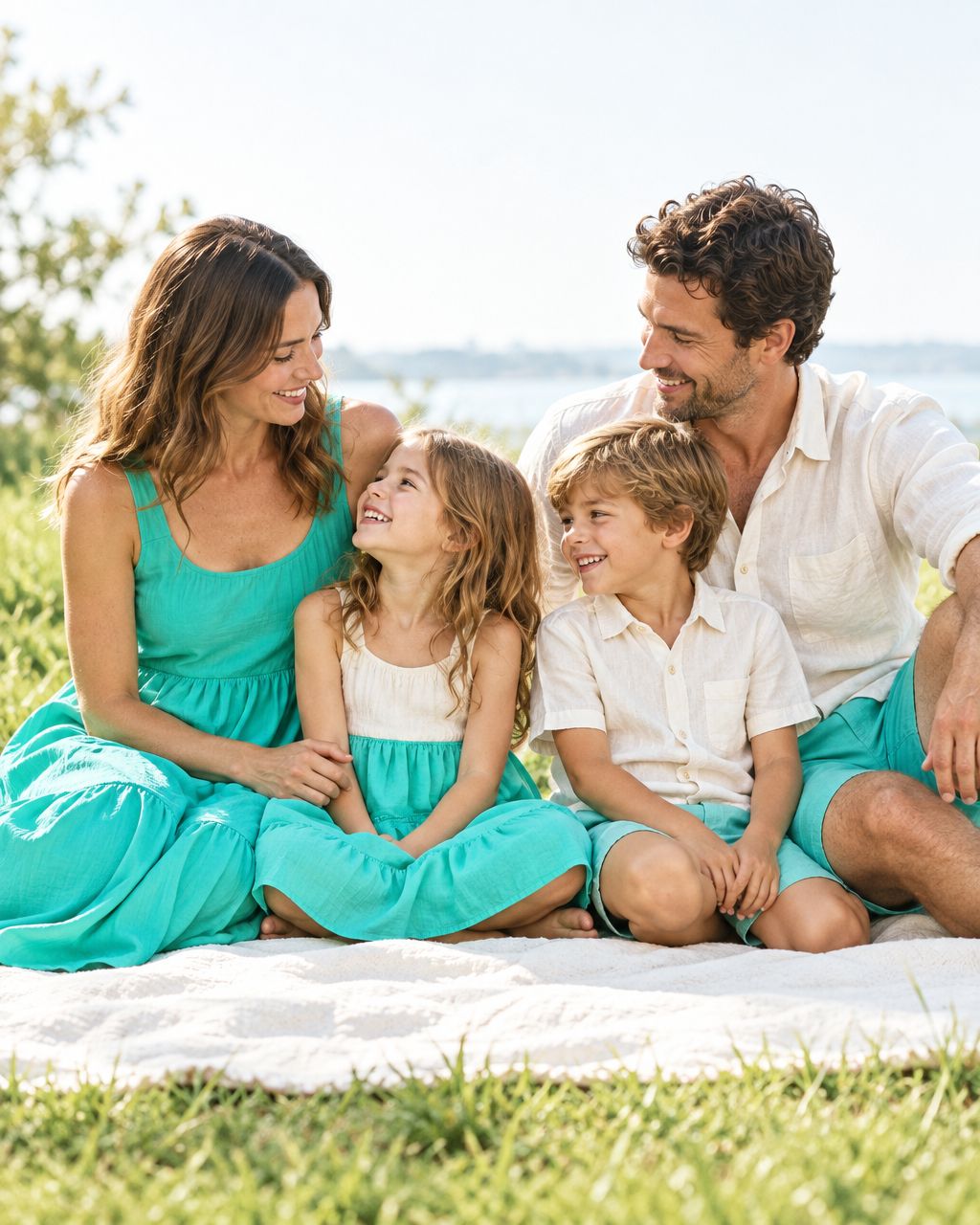
Choose matching sibling outfits by starting with a print or color everyone likes, then finding a comfortable style for each family member. Check the adult pieces alongside the children's clothes before settling on a look, so Mama, Daddy, and the little ones can join without wearing the exact same outfit.
- Matching sibling outfits work best when comfort comes before an identical silhouette.
- Check children's and adult pieces together before choosing a shared print.
- Use one repeated color when everyone prefers a different outfit.
- Tied Together Design offers matching options for siblings and adults, with a personal small-business approach.
Why this matters
A matching moment should feel like your family, not a dress code. One child might want a dress, another might prefer a top and shorts, and a parent might feel happiest in joggers. You can bring those preferences together without asking everyone to give up what they enjoy wearing.
The founder's story behind Tied Together Design starts with a mama looking for matching options for her boy, her girl, and the whole family. That is a useful place to begin your own shopping: think about every person who wants to take part, not just the children's outfits.
Choose the connection first, then choose the clothes. A repeated print, a shared color, or a small matching detail can make a family look feel intentional.
How to choose matching sibling outfits the whole family can join
1. Decide what you are dressing for
Start with the day you have in mind. A family photo, a park outing, and a quiet morning at home ask different things of your clothes. If your children will be running around, choose styles they already enjoy moving in rather than something they will only tolerate for a picture.
For a photo, think about what happens before and afterward. Will you walk to the spot? Is there somewhere to change? Will the children want to play as soon as the camera goes away? Those answers help you choose an outfit that belongs to the day instead of interrupting it.
Write down a short plan before you browse:
- The occasion and where it will happen.
- The family members who want to join.
- Each person's preferred clothing style.
- Any layers or familiar pieces you already own.
That little list gives you something to come back to when a lovely print catches your eye but does not fit your plans.
2. Choose a print or a small color palette
For a simple starting point, choose 1 shared print or 2 main colors. These are styling suggestions, not rules. A smaller palette simply gives you fewer decisions to make while you put the outfits together.
An identical print creates an obvious match. A shared color is a gentler connection, especially when adults want to wear something from their own wardrobe. You can also let the children share a print while parents repeat one of its colors in a plain top or familiar layer.
Picture the outfits together rather than judging each item on its own. If every piece is colorful, decide whether that feels cheerful to you or more busy than you wanted. Neither choice is wrong; the right look is the one your family actually likes.
3. Check the adult pieces before committing
If the whole family wants to match, look at adult options at the same time as the children's pieces. Finding a lovely sibling set does not automatically mean there is a corresponding adult style.
Check each person's size and garment separately. A print appearing in several styles is not a promise that every style comes in every size. Read the current product pages, and ask the shop about anything you cannot confirm.
Tied Together Design describes matching options for Mama and son, Daddy and daughter, and the whole family. That makes it relevant to families shopping beyond sibling sets. The practical limitation is that you still need to check the individual pieces rather than assume a complete family outfit is sold together.
Build the family look from the pieces you can confirm, not from the combination you hope exists. If an adult prefers a plain top with a matching bottom, that still counts as joining in.
4. Give each sibling a style they enjoy
Matching does not mean identical shapes. A dress and a two-piece outfit can share a print, just as a parent and child can repeat a color while wearing different clothes.
Ask each child about the part that matters to them. Some care about the picture on the fabric; others care about sleeves, the waistband, or wearing their favorite kind of outfit. Giving them a real choice helps keep the matching moment friendly rather than turning it into a negotiation at the door.
Before you choose, check:
- Whether the child likes the neckline and sleeve style.
- Whether the outfit suits the activities you have planned.
- Whether any fastenings will make getting dressed awkward.
- Whether the shoes and layers you already own work with it.
For babies, keep the clothing decision separate from decorative accessories. Follow the item's age guidance and the baby's care needs rather than choosing an accessory just because it finishes the picture.
5. Read the size guidance for every garment
Do not choose each child's size from age alone. Read the shop's current size guidance for the particular item, especially when you are mixing dresses, joggers, and two-piece outfits.
If measurements are provided, compare them with the child or with a familiar garment as the guide directs. Notice whether the chart describes body measurements or the clothing itself; those are different things. When the chart is unclear, ask before buying rather than guessing.
For adults, think about the fit you actually want. A closer fit and a relaxed fit are different preferences, and neither should be decided by how the children's outfits look. Each person's clothing needs to work on its own.
Keep a simple shopping note with the person's name, chosen garment, and checked size. It is especially helpful when siblings wear different styles. Review it before checkout so a size selected for one child does not accidentally carry over to another item.
6. Check fabric and care details without assuming benefits
If soft bamboo clothing is part of what you are looking for, read the actual fabric description. The word bamboo alone does not tell you the full fiber blend, the weight of the fabric, or how a garment should be washed.
Choose from the details the shop provides rather than broad promises about the fabric. Softness is a reason to consider a garment, but it is not proof that the item meets every comfort need or suits every activity.
Check the care label before grouping the family's clothes into one wash. Different items in a coordinated look can have different instructions, even when their colors match. An outfit that fits your normal laundry routine is easier to reach for again.
You do not need a complicated fabric lesson to make a good decision. You need clear information about the item in front of you and a comfortable style for the person wearing it.
7. Confirm the ordering details for your occasion
Read whether each piece is offered as a preorder or a ready-to-ship item, along with the current fulfillment information. Tied Together Design explains that it works with preorders and limited ready-to-ship clothing; treat the individual listing as your guide for the purchase you are considering.
Do not plan a fixed-date event around an assumed delivery date. If the information is unclear, contact the shop before ordering and explain the date you need the clothes for. Also read the current sizing-change, return, and exchange terms before deciding.
For a family purchase, check the whole basket together. One different ordering arrangement can change whether the outfits work for your plan. Knowing that before checkout is more useful than discovering it after the children's favorite print is chosen.
Which matching approach fits your family?
Use this comparison to choose how closely you want the outfits to match. These are styling approaches, not promises about a particular collection.
| Approach | Best for | What works well | What to consider |
|---|---|---|---|
| The same print in different styles | Families who want an obvious match | Everyone shares a clear visual connection | You need to confirm each person's garment and size separately |
| Printed sibling pieces with plain adult clothing | Parents who want to use their own wardrobe | Adults can join without a full matching set | The shared color needs to be chosen intentionally |
| A shared color palette | Families with different clothing preferences | Flexible enough for dresses, shorts, tops, and layers | The result looks coordinated rather than identical |
| One repeated detail | Families who prefer a subtle match | A small connection leaves room for individual style | Too many extra details can distract from the simple idea |
The best approach is the one everyone feels comfortable wearing. Start with the clearest shared detail, then leave room for each person's preferences.
Why your family look needs its own plan
A photo of another family's outfits is inspiration, not a shopping list for yours. Your combination changes with the people, occasion, and styles involved.
These are the main choices that shape the result:
- Family members: Including adults changes which pieces you need to confirm first.
- Preferred styles: A child who loves dresses needs a different starting point from a sibling who prefers shorts.
- Occasion: A quiet morning and an outdoor outing do not need the same outfit plan.
- Weather and layers: The visible shared detail should still work with any extra clothing you expect to wear.
- Existing wardrobe: Familiar tops, shoes, and layers can connect the look without replacing everything.
- Ordering arrangements: Read the current listing before relying on any item for a fixed date.
You can make those decisions without chasing a perfect picture. Begin with what your family will use, and let the matching part support it.
Can siblings match without wearing identical outfits?
Yes. Siblings can share a print or color while wearing different garment styles. The shared detail does the matching; the cut of the clothing can stay personal.
For example, choose a common color in each child's outfit and use the same color again in a parent's top. This is a styling example, not a specific product combination you need to buy.
How can Mama and Daddy join without buying complete matching outfits?
Repeat a color from the children's clothes in something you already enjoy wearing. A plain top, a familiar layer, or a matching bottom can connect an adult outfit to the children's look.
Lay the pieces beside each other before deciding. You are checking whether they feel connected, not whether every item is identical.
What should you do when the family cannot agree on one print?
Choose a shared color instead. Let each person keep their preferred style, and look for a small connection that does not depend on everyone liking the same design.
If one child does not want to take part, keep the invitation gentle. A matching moment is not worth making someone uncomfortable; the family memory matters more than the outfit plan.
FAQ
What's the easiest way to choose matching sibling outfits?
Start with one shared print or color, then choose a comfortable garment for each child. Check adult options at the same time if the whole family wants to join.
Can a brother and sister match in different styles?
Yes. A brother and sister can share a print or color without wearing the same garment style. Let each child choose a shape they enjoy wearing.
Do matching family outfits have to be identical?
No. A shared color, print, or detail is enough to connect family outfits. Identical clothes are one option, not a requirement.
How do I choose sizes for matching sibling outfits?
Use the current size guidance for each garment rather than relying on age alone. Ask the shop to clarify any measurements or fit information you cannot confirm.
Should I check adult clothes before buying the sibling pieces?
Yes, if adults want to join. Confirm the adult styles and sizes alongside the children's pieces before committing to a print.
Can I use clothes we already own in a matching family look?
Yes. Pick a color from the children's outfits and repeat it in an adult top or layer you already own. This creates a connection without replacing every piece.
What should I check when shopping for bamboo clothing?
Read the fiber description, garment details, and care instructions for the specific item. Do not assume that the word bamboo tells you the full blend or guarantees a particular benefit.
One last thing
Before you buy, make a 3-part check: comfort, confirmed sizes, and a shared detail. If those are in place, your matching plan does not need anything extra.
Tied Together Design is for families looking for matching options that include adults as well as siblings. When you are ready, browse the family clothing collections with everyone's preferences in mind. Keep the pieces that work, leave the ones that do not, and make the matching moment your own.